
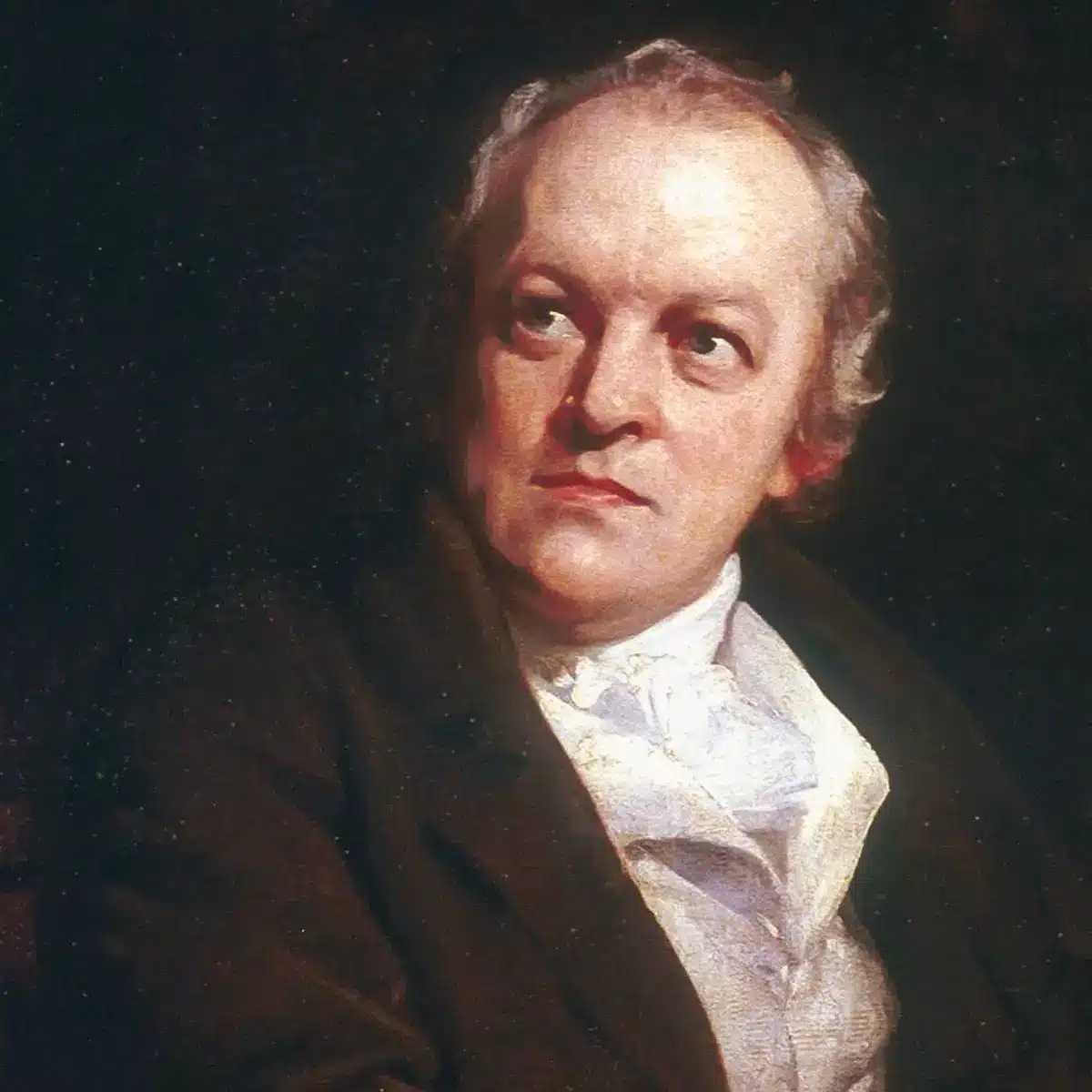
William Blake zum Geburtstag (28.11.1757 – 12.8.1827)
Fjodor M. Dostojewski war der menschlichen Vernunft gegenüber zumindest skeptisch:
«Aber die Vernunft hat sich doch vor der Wirklichkeit als bankrott erwiesen, (…).»
(1999) Winteraufzeichnungen über Sommereindrücke. München, Piper. S. 795
Mit dieser noch heute gültigen – so meint zumindest der Alte – Aussage trifft er die Stimmungen, welchen William Blake bereits ein Jahrhundert früher Ausdruck verliehen hat.
William Blake geißelt die Süffisanz der etablierten Schichten der Gesellschaft gegenüber den allzu menschlichen Erfahrungen und Leiden der Minderbemittelten, der Abhängigen und Versklavten:
“It is an easy thing to rejoice in the tents of prosperity:
Thus could I sing and thus rejoice: but it is not so with me.”
Doch William Blake macht da nicht mit!
Kaltblütig rechnet er mit den ach so vernunftbegabten Menschen ab und hält den unter ihnen herausragenden Bildungsfetischisten gandenlos den Spiegel vors Gesicht:
“Wisdom is sold in the desolate market where none come to buy …”
Lesen Sie selbst William Blakes Text:
What is the price of experience? Do men buy it for a song?
Or wisdom for a dance in the street? No, it is bought with the price
Of all a man hath, his house, his wife, his children.
Wisdom is sold in the desolate market where none come to buy,
And in the wither’d field where the farmer plows for bread in vain.
It is an easy thing to triumph in the summer’s sun.
And in the vintage and to sing on the waggon loaded with corn.
It is an easy thing to talk of patience to the afflicted,
To speak the laws of prudence to the houseless wanderer,
To listen to the hungry raven’s cry in wintry season
When the red blood is fill’d with wine and with the marrow of lambs.
It is an easy thing to laugh at wrathful elements,
To hear the dog howl at the wintry door, the ox in the slaughterhouse moan;
To see a god on every wind and a blessing on every blast;
To hear sounds of love in the thunder-storm that destroys our enemies’ house;
To rejoice in the blight that covers his field, and the sickness that cuts off his children,
While our olive and vine sing and laugh round our door, and our children bring fruits and flowers.
Then the groan and the dolour are quite forgotten, and the slave grinding at the mill,
And the captive in chains, and the poor in the prison, and the soldier in the field
When the shatter’d bone hath laid him groaning among the happier dead.
It is an easy thing to rejoice in the tents of prosperity:
Thus could I sing and thus rejoice: but it is not so with me.
William Blake (1757–1827)
from The Four Zoas, composed in 1795. It remained unpublished until 1893.
Mike Westbrook hat den Text vertont, einmal mit Streichern:
Hier die Originalversion: